RebbeDaf

Why RebbeDaf exists

One Torah.
Not two worlds.

I love learning Gemara, and I love learning Chassidus. RebbeDaf begins from the conviction that they should not be experienced as separate pursuits. They belong to one Torah, and each can be understood more fully when it illuminates the other.

A tree beside the road

“How beautiful is this tree! How beautiful is this plowed field!”Pirkei Avos 3:7

The interruption is the separation.

Pirkei Avos describes a person reviewing Torah while walking, who interrupts his learning to admire a tree or a plowed field. The Mishnah treats that interruption with startling severity.

The Chassidic reading that animates this project is that the problem is not seeing the tree. It is seeing the tree and the Torah as two separate things: study over here, the world over there. Once they are divided, both are diminished. The Torah is made smaller than life, and the tree is emptied of the godliness that gives it meaning.

RebbeDaf carries that same intuition into the relationship between Nigleh and Chassidus. Gemara and the inner life of Torah are not competing subjects. They are two ways of encountering one truth.

01 · The personal need
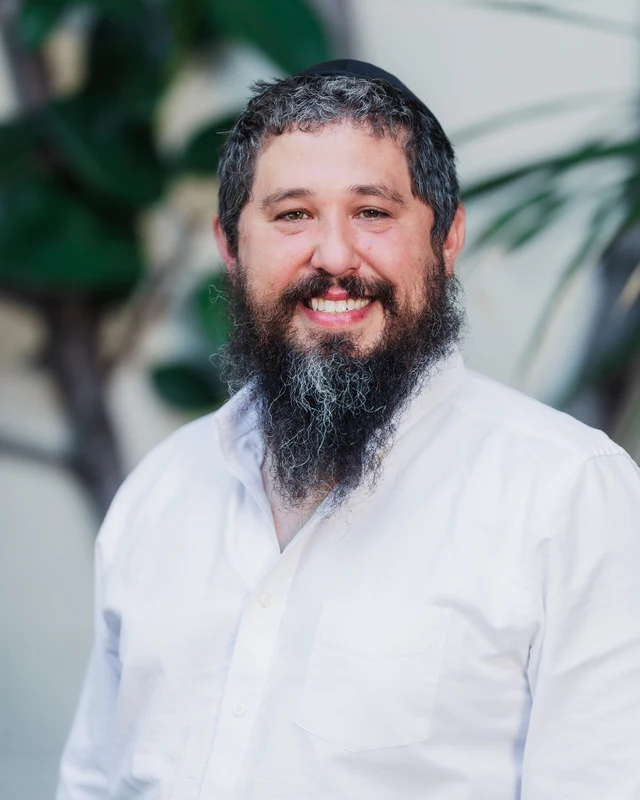
The question I bring to the daf.

It is far too easy—for me, at least—to finish a daf and walk away without seeing the godliness in it.

I can understand the argument and still not feel where Hashem is in the sugya. I can follow the logic and still not know what the daf asks of me, how it should change my conduct, or why it is personal. The learning can remain brilliant and exact while somehow staying at a distance.

Chassidus teaches me to ask the questions that close that distance: What does this reveal about the world? What does it reveal about a Jew? What form of avodah is hidden inside the argument? How does the sugya become something I can live?

RebbeDaf is an attempt to leave the daf with more than an answer—to leave with a way of seeing.
02 · The wider audience

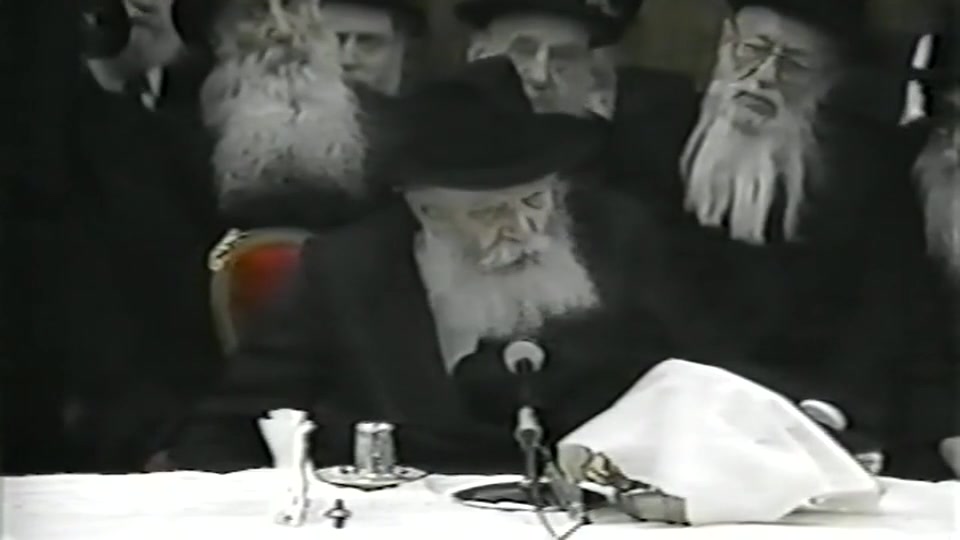
Bringing the Rebbe inside the Gemara.

The range and depth of the Rebbe’s Torah are still not widely understood.

Many Jews outside Lubavitch have never encountered the extent of his scholarship: how he moves through Shas, Rishonim and Acharonim, halachah, Midrash and Chassidus, and how precisely he draws practical and spiritual consequence from every part of Torah.

Mapping those teachings onto the daf offers another way in. There are Litvishe Yidden and Daf Yomi learners whose daily intellectual and spiritual home is the Gemara. Chassidus will not reach them if it is packaged as something that begins only after one leaves the daf. It has to meet them inside the learning they already love.

For RebbeDaf, יפוצו מעינותיך חוצה means: into the Gemara, too.

03 · Hakaras hatov

A debt of gratitude.

Rabbi Avraham Zajac taught me to learn Gemara in this way.

He showed me that the daf could be rigorous without becoming sealed off, and personal without becoming vague. He inspired the habit at the center of this project: to remain faithful to the words and structure of the sugya while listening for what they open in avodas Hashem.

RebbeDaf is also an expression of gratitude to the Rebbe. The goal is not merely to collect references, but to help more Yidden encounter the scale, precision and living relevance of his Torah—especially readers who might never otherwise find their way into it.

What the project does

A daily bridge, built from exact sources.

  1. 01
    Locate every citation to the day’s daf across the Toras Menachem corpus.
  2. 02
    Identify the exact phrase the Rebbe quotes or develops, without blurring quotation and paraphrase.
  3. 03
    Show what the citation opens in the daf and what it asks in avodas Hashem.
  4. 04
    Return the reader to the Hebrew, English rendering, original footnotes and complete citation register.
  5. 05
    Make the Rebbe’s Torah more accessible to Daf Yomi learners and to Yidden whose learning lives inside Gemara.

Method & provenance

The mission is personal. The method is inspectable.

Every publication keeps the source record visible and distinguishes what was found, what was translated, and what remains pending review.

01

Corpus first

Each page begins from a scan of the Toras Menachem citation corpus. A page publishes only when actual citations are present and checked.

02

Exact distinctions

Verbatim quotation, paraphrase, and editorial synthesis are labeled rather than collapsed into one voice.

03

Primary material

The relevant Hebrew sections, English rendering, original footnotes, source links, and complete citation register remain available on the daf page.

04

Review state

Drafted English and synthesis remain explicitly pending rabbinic review until that review actually occurs. Publication does not imply approval.

05

Human audio

When audio is available, it is the matching author recording. RebbeDaf does not silently substitute synthetic narration.

06

Private stays private

Editorial meditation material is not part of the public site, archive, navigation, sitemap, or publication manifest.

07

Anonymous signals only

RebbeDaf records bounded events such as page views, audio starts, source opens, and next-daf clicks without cookies, names, email addresses, phone numbers, query strings, or referrers.